Building the Future of Early Learning, in Five Languages
The following first appeared in the Seattle College Foundation’s “The College Minute” newsletter.
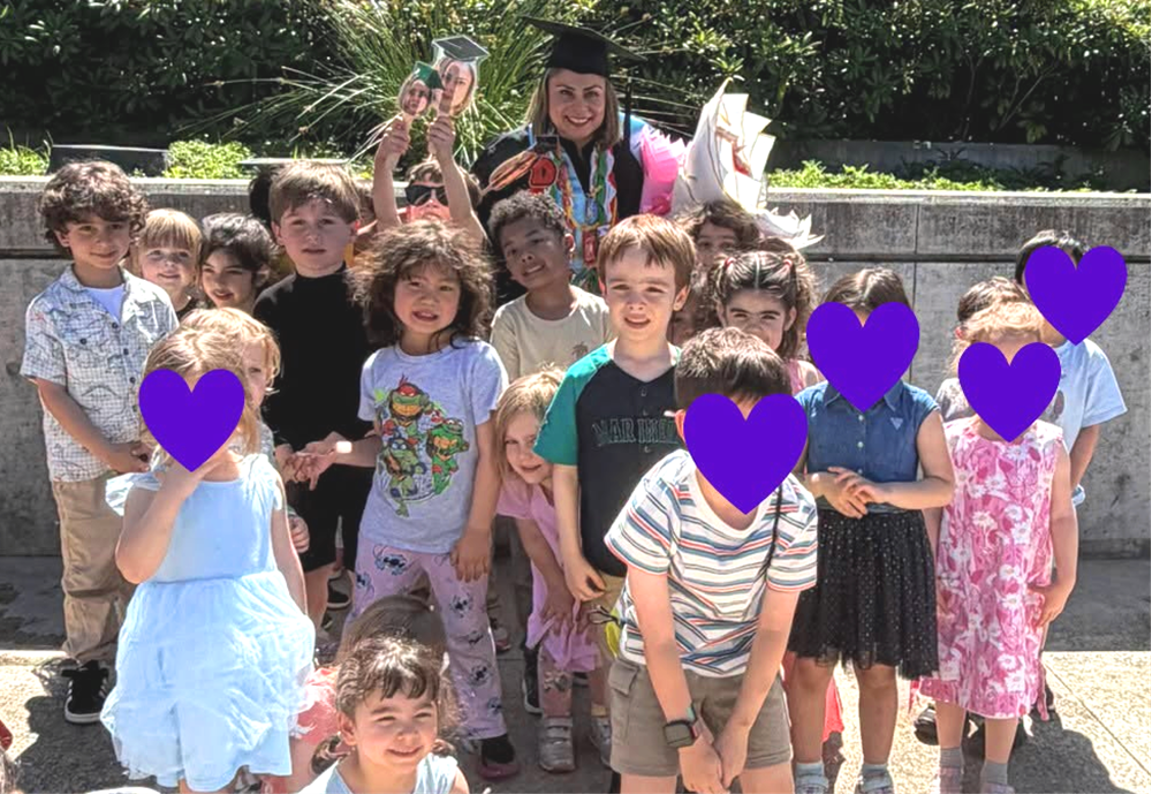
A few months ago, 26 preschoolers from El Centro de la Raza's José Martí Child Development Center boarded a Link light rail train alongside 10 parent chaperones. It was the kids' first field trip.
They were going to watch their teacher, Ms. Diana, graduate from college at Alaska Airlines Arena on the University of Washington campus.
Diana Ramirez (above) earned her Bachelor of Applied Science in Early Childhood Education from North Seattle College. With the new degree she's now equipped to be even more effective as a leader and teacher at José Martí, known for dual-language classrooms where Spanish and English share the stage.
North is a pioneer in training early-learning educators from a wealth of cultural and linguistic backgrounds. Courses are offered not only in English but also Spanish, Arabic, Somali, and Oromo.
A program conducted entirely in Spanish has grown from a 12-credit certificate into the state’s first full-immersion Bachelor of Applied Science degree. In June, its inaugural class of 26 students graduated.
The idea behind training educators in their home language is straightforward: English fluency and teaching ability are not the same thing.
Early-learning teachers need to understand child development. They need judgment, patience, warmth, and the ability to build trust with children and families, all of which are strengthened by knowing families’ home language.
The Kids are Alright
Decades of research show that young children can readily learn two languages, and that maintaining a home language doesn't interfere with mastering English. Maintaining the home language can also strengthen family relationships, preserve cultural knowledge, and give children another foundation for communication and learning.
José Martí, founded with El Centro de la Raza in 1972, builds its curriculum on that premise: strengthening each child’s first language and culture while supporting second-language development.
Ninderjit Gill, who leads North’s language-immersion cohorts, puts the stakes in personal terms: “I think about my mom, who’s an incredible caregiver. She’s been here for decades but doesn’t speak perfect English. If she had the opportunity to take classes in her home language, she’d have her own child-care business right now.
For Diana Ramirez, the degree is more than a credential. It is proof — to her students, their families, and the next generation of educators — that the path to a satisfying career does not have to begin by leaving your language behind. Sometimes, it begins by bringing it with you.
Child Care’s Business Side
Alexa López Ochoa is completing North Seattle College’s Early Childhood Education program — and is already turning her education into opportunity.
Fueled by an entrepreneurial drive and a deep love of working with children seeded during her time volunteering in her home country, Mexico, she recently launched a full Spanish immersion preschool in Magnolia, Bilingual Beginnings. Its young students have already given it a nickname: the “Purple School.” Alexa chose purple as a recurring motif because it was her favorite color as a child.
Painting the walls and opening the doors was only the beginning. Determined to build a business that thrives, Alexa joined North’s brand-new Entrepreneurship Accelerator, made possible through a gift to the Seattle Colleges Foundation.
The Accelerator pairs emerging business owners with faculty and business students for practical, real-time help with the challenges that can make or break a startup. Alexa’s team is strengthening her social media marketing, building out a full-featured website, exploring affordable outdoor signage, and establishing QuickBooks and other essential financial systems.
“With help on the business side, I can focus on the core work,” Alexa says, “giving kids their best possible experience as early learners.”